

Playing with Chords
Structured, step-by-step course that teaches how to play from a lead sheet.
Who it is for
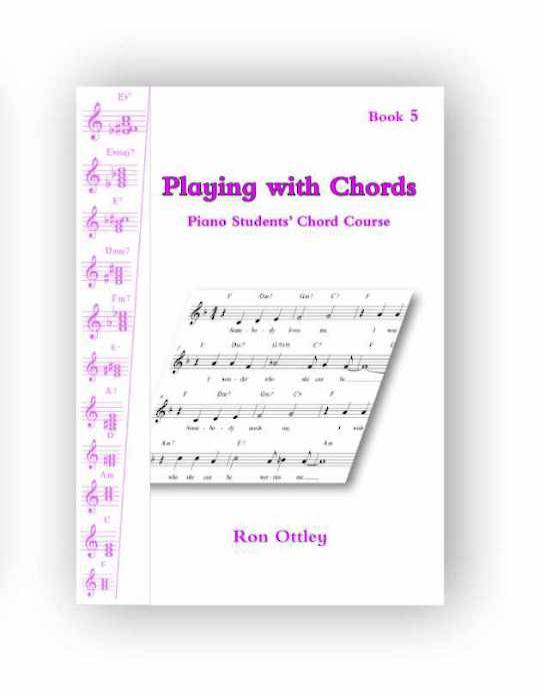
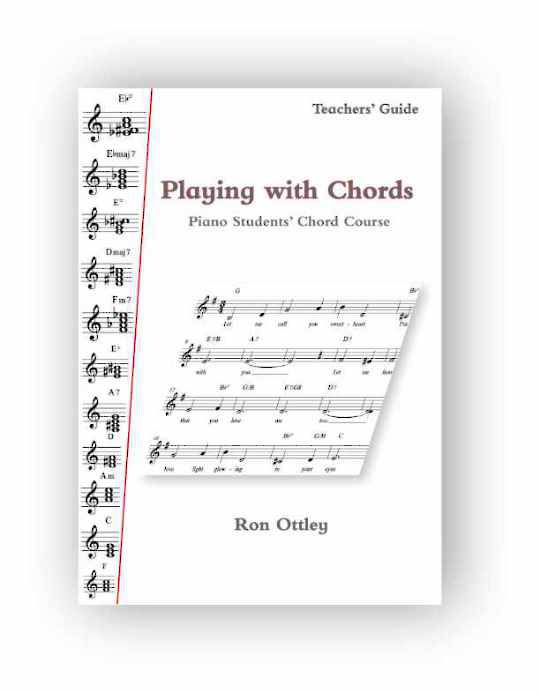
Playing with Chords consists of five method books plus a teacher's guide.
1. Piano students.
The course was written for piano students and they are the main focus.
It would usually be used as a supplement to traditional lessons, although for some students it could be the main course. Switching to chord based lessons can sometimes save a student who is considering quitting.
Students need to have reached at least grade two before beginning the course.
2. Classical pianists who want to play from lead sheets.
Classical pianists who want to increase their knowledge and ability to play from lead sheets will find Playing with Chords a great resource.
It is written from a classical perspective.
3. Adults who want to teach themselves.
Adults with a basic ability to read music can use Playing with Chords to teach themselves. The chord based method will facilitate rapid progress. It is an economical but thorough course.
About the course
by Ron Ottley
We learn to play from a lead sheet the same way we learn most complex skills, that is by mastering a multitude of small achievable steps. However it makes sense to have a plan where each step builds on what has been learned in an organised and structured way.
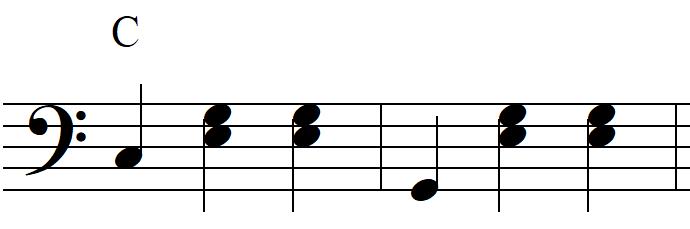
I have found the best way to teach beginners of all ages is to use simple songs in 3/4 time using an oom-pah-pah bass pattern. This pattern can have students sounding good quite quickly and 3/4 gives them a little more time to think about what they are doing and what comes next. It is the first pattern to learn in Playing with Chords.
This pattern can have students sounding good quite quickly.
This is the suggested pattern for the first chord C.
The low G (the fifth) in the second bar makes the pattern slightly more difficult but it is worth persevering with because it sounds so much better. Repeating the root in every bar quickly becomes monotonous and boring.
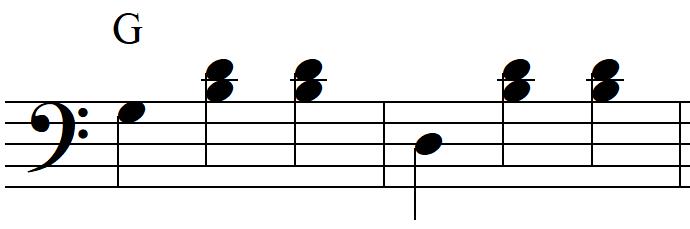
The course begins with the two chords built on the tonic, C and the dominant, G. (The 1 chord and the 5 chord). There are thousands of songs that only have these two chords. You would expect the G chord pattern to mimic the C chord, like this.
However, there is a problem.
However, there is a problem. The notes are high on the keyboard and will often be playing the same notes the right hand needs to play, especially when harmony notes under the melody are introduced. Playing the pattern an octave lower is not a good option because it sounds too muddy. The lower that notes are played on a piano the further apart they need to be.
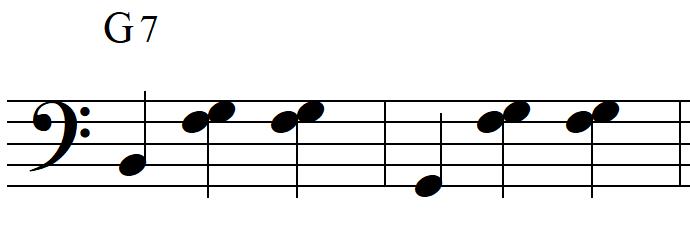
Fortunately there is an excellent solution to this problem. Instead of a G chord I skip straight to a G7 chord using this pattern. How the C chord, the G7 chord and each new chord is constructed is fully explained in the course.
This pattern not only ameliorates the problem of the overlapping hands it also means the hand position for the C and the G7 chords are very close which is desirable. There is a strong rhythm component and most importantly, it sounds great. Even when the right hand is only playing a single melody note this pattern enables beginners to produce a satisfying sound. Playing with Chords includes songs with these two chords to practice, plus there are many songs that can be added.
Even when the right hand is only playing a single melody note this pattern enables beginners to produce a satisfying sound.
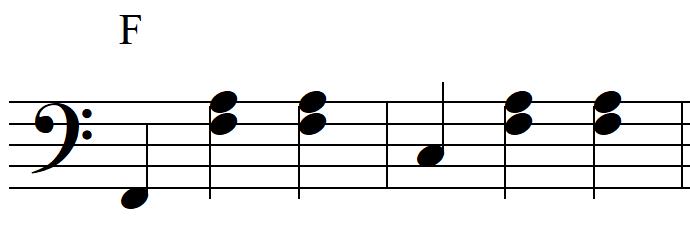
The third chord to introduce, of course, is F. Then our student will know the three primary chords in the key of C. F has the same problem as G, it is too high and will cause problems with both hands wanting to play the same notes. F7 is not an option in this case. The solution is a little complicated but the student has to learn to improvise, solve problems and adapt.
The suggested solution is to alternate a low root and fifth on the first beat and play a chord on beats two and three as high as practical without clashing with the right hand
Description
- • Playing from a lead sheet involves creating an arrangement.
- • Playing with Chords will teach piano students how to create a pleasing and accomplished arrangement using chords.
- • Students will learn many different styles.
- • They will study a wide variety of arranging tips and techniques.
- • Playing with Chords has a strong emphasis on theory and students will acquire a good overall understanding of arranging principles.
- • It encourages and facilitates improvising, especially playing around with chords
A4, 12ins x 8ins approx. 32 pages, soft cover.
Order 4 or more books from this site to get FREE WORLDWIDE SHIPPING!
Playing with Chords books
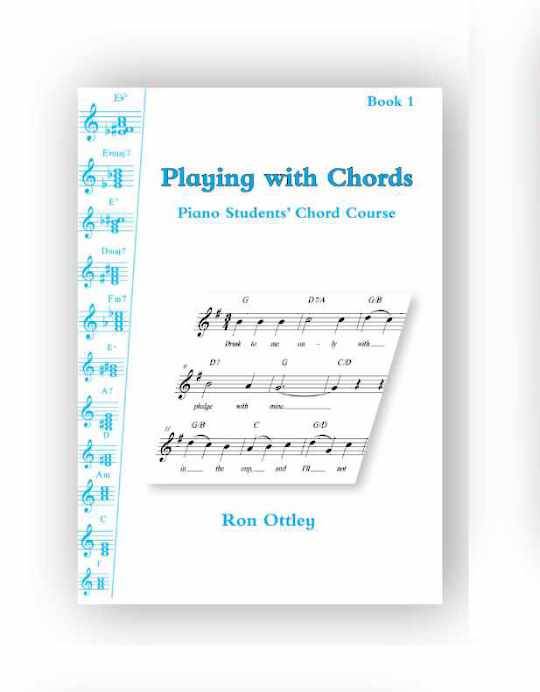
Playing with Chords Book 1
Introduction to chord-based piano playing from lead sheets for students at grade one and above.
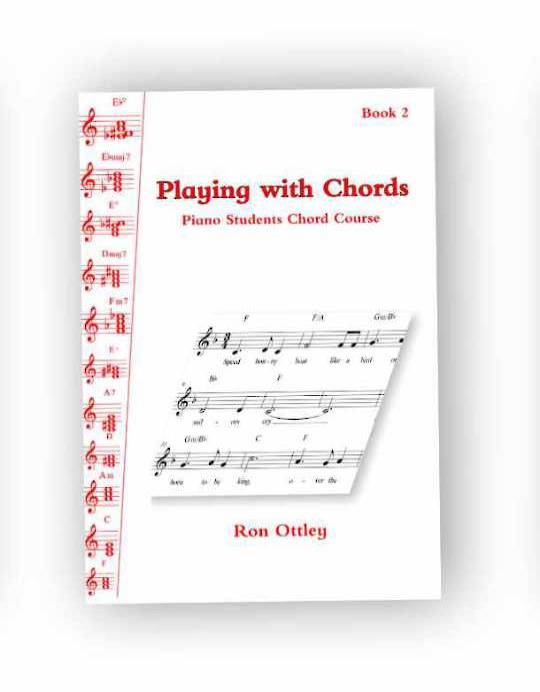
Playing with Chords Book 2
Progressive chord patterns, new keys, and arranging ideas with songs to practise each concept.
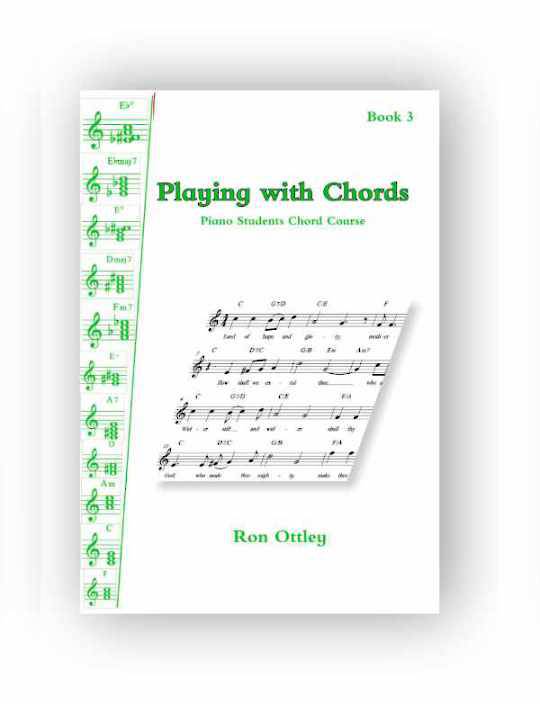
Playing with Chords Book 3
Continues the progressive chord method with new patterns, keys, and practice songs.
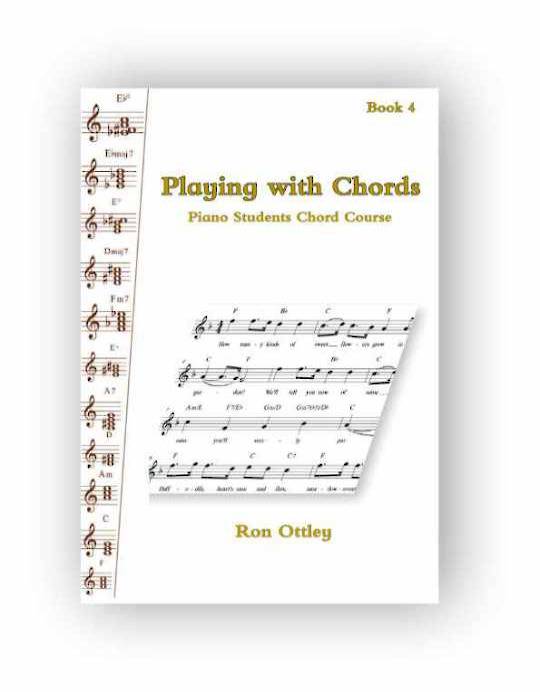
Playing with Chords Book 4
Advanced arranging techniques and chord patterns for developing lead-sheet players.
Playing with Chords Book 5
Further development of chord arranging skills for more advanced students.
Playing with Chords Teacher's Guide
Teacher's guide with tips and support for instructors using the Playing with Chords method.
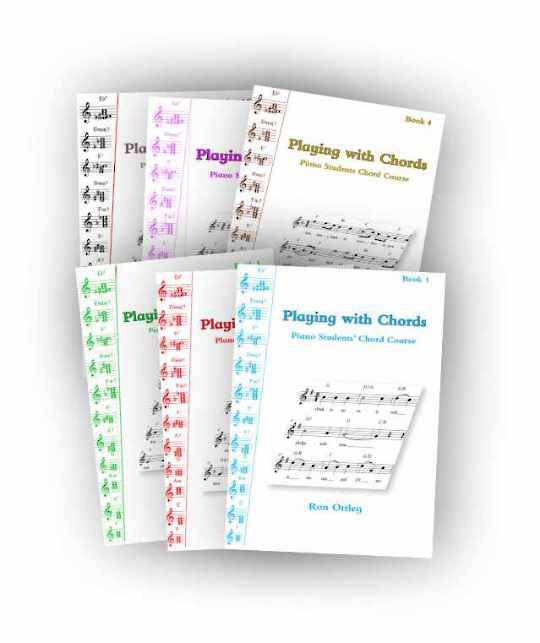
6 pack - all 6 books
Complete physical set: Books 1–5 plus the Teacher's Guide at a bundle price.
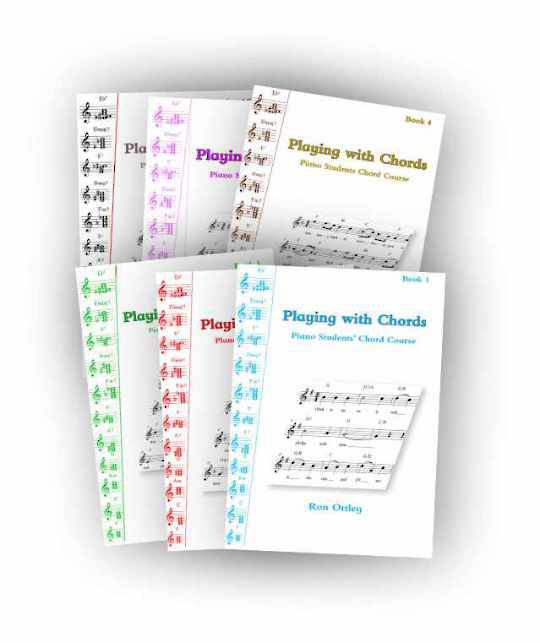
All 6 books - Digital version with Studio License
Digital download of all six Playing with Chords books with studio license for teachers.
Studio License Terms
- •You can use Playing with Chords in any way you wish with all your current and future students.
- •You can print complete books or individual pages to give to students.
- •You cannot share the material with any other teachers, or students of other teachers, even teachers who are in the same studio. They must purchase their own license. You can share files with your students electronically but they cannot share this material with anyone else.
- •You cannot use the material in this course for any other purpose.
- •You are expected at all times to protect the copyright owners interests by not allowing illegal copies to be made, and not allowing the copyright files to escape to the wider internet.
What people are saying
“Playing with Chords is fabulous. It's the first method I've found that actually teaches lead sheets in a really methodical, practical way and without overwhelming students.”
“I am very impressed with these books.”
“I bought the Playing with Chords books and I really like them! I use them all the time as supplement to standard pieces. Knowledge of chords is a fundamental aspect of teaching for me. I was always on the lookout for help to play from lead sheets, and when I came across Playing with Chords, I was so thankful that someone filled this gap!”
“I am the teacher but I have learned so much from these books and my arranging skills have improved dramatically. The books are great.”
“Love your books. Have used them with my adult students learning LH chords.”
“The Playing with Chords books are awesome. A mix of well-known songs supplemented with information on how to play chord style. My students are enjoying them.”

FAQ
Yes you can! We are open for business.